
How Programmatic Advertising Works: A Step-by-Step Process
Advertisement
As the world rapidly moves toward integrating automation in its processes to eliminate manual processes, even marketers have started embracing automation in their advertising to avoid the need for manual negotiations. There are various advertisers that have embraced programmatic advertising campaigns that leverage artificial intelligence and machine learning to optimize ad placements. In this blog, let us have a look at how programmatic advertising works and a step-by-step process to develop an effective programmatic ad campaign.
 Programmatic advertising or buying refers to the automated process of purchasing and selling digital ad spaces using software. However, it is more than just automation; it is a data-driven advertising strategy that helps advertisers make their brand visible to the right audience at the right time through the right channel.
Rather than ordering manual media buys that require negotiation with various insertion orders (IOs) with different buyers, programmatic advertisers leverage cutting-edge software and algorithms to purchase impressions through ad exchanges, enabling easy access to multiple publishers at a single time.
Given below are a few fundamentals of programmatic advertising:
Programmatic advertising or buying refers to the automated process of purchasing and selling digital ad spaces using software. However, it is more than just automation; it is a data-driven advertising strategy that helps advertisers make their brand visible to the right audience at the right time through the right channel.
Rather than ordering manual media buys that require negotiation with various insertion orders (IOs) with different buyers, programmatic advertisers leverage cutting-edge software and algorithms to purchase impressions through ad exchanges, enabling easy access to multiple publishers at a single time.
Given below are a few fundamentals of programmatic advertising:
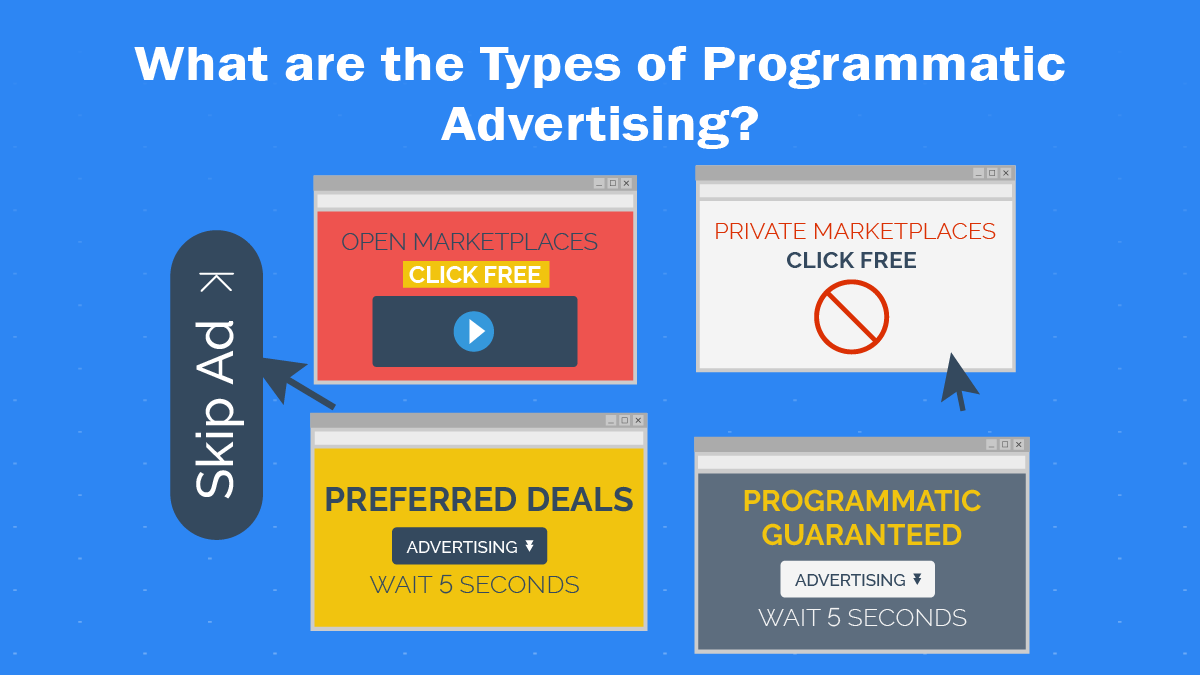 Given below are a few types of programmatic advertising available:
What is Programmatic Advertising? Understanding the Basics
Programmatic advertising or buying refers to the automated process of purchasing and selling digital ad spaces using software. However, it is more than just automation; it is a data-driven advertising strategy that helps advertisers make their brand visible to the right audience at the right time through the right channel.
Rather than ordering manual media buys that require negotiation with various insertion orders (IOs) with different buyers, programmatic advertisers leverage cutting-edge software and algorithms to purchase impressions through ad exchanges, enabling easy access to multiple publishers at a single time.
Given below are a few fundamentals of programmatic advertising:
- Advertisers: Advertisers are the ad purchasers seeking to expand their target audiences. They buy ad inventory and manage campaigns using demand-side platforms (DSPs).
- Publishers: Publishers are the managers or editors of websites that offer ad spaces on their sites. They make ad impressions accessible to the advertisers using supply-side platforms (SSPs).
- Ad exchanges: It is a digital marketplace that connects publishers and advertisers via auctions.
- DSPs (Demand Side Platforms): A tool utilized by advertisers to purchase ad spaces from exchanges.
- SSPs (Supply Side Platforms): It is a tool that allows publishers to make ad spaces accessible to exchanges.
Also Read: Dynamic Creative Ads: 10 Steps to Create & Track Facebook Ads
What are the Types of Programmatic Advertising?
Given below are a few types of programmatic advertising available:
1. Open Marketplaces
Open marketplaces are also referred to as real-time bidding (RTB), which is a programmatic advertising marketplace where advertisers can place bids for ad spaces and impressions.2. Private Marketplaces
These digital marketplaces are accessible on an invitation basis. Advertisers will be able to place ads on the websites once they receive placement options from publishers.3. Preferred Deals
Advertisers can get priority placements by using preferred deals. It is a collaborative effort between ad sellers and publishers about the ad placement or impressions.4. Programmatic Guaranteed
This type of programmatic advertising promises advertisers a specific amount of impressions for their ads. Programmatic guaranteed is decided manually rather than bidding.A Step-by-Step Process To Develop An Efficient Programmatic Advertising Campaign
Here is a step-by-step guide to developing an impactful programmatic advertising campaign:1. Define Goals & Have a Strategic Planning
Advertisers need to clearly understand their goals for programmatic advertising. It is crucial to determine the brand's immediate objectives, whether they want to create brand awareness, increase conversion rates, or improve their return on investment (ROI). Decision-makers need to identify and establish key performance indicators (KPIs) to track progress. The KPIs for programmatic advertising could include cost-per-click, return on ad spend, or customer acquisition cost. This foundation to programmatic advertising ensures a targeted approach that aligns with your business priorities.● Creative Formats: Advertisers can decide from the following creative formats which ad formats best suit their brand objectives:
- Banner Ads: Ideal for driving broad brand awareness due to their visibility on web pages.
- Video Ads: Excellent for engagement, storytelling, or product demonstrations, especially when running on platforms like YouTube or social media.
- Native Ads: They blend into the content of websites. Such ads promote organic interactions and higher click-through rates.
- In-App Ads: Effective for targeting mobile users with high engagement rates, particularly in gaming or lifestyle apps.
2. Select the Best Demand-Side Platform (DSP)
A DSP automates media buying across various ad exchanges, enabling real-time bidding (RTB) for ad space. Choosing the right DSP is crucial for advertisers. Each DSP offers distinct features like targeting capabilities, integrations, and ease of use. For example:- Amazon DSP offers deep first-party data for precise targeting within the Amazon ecosystem.
- MediaMath provides access to multiple data providers and transparency in optimization.
- The Trade Desk is known for its powerful cross-device targeting capabilities and detailed reporting.
- Reach and Inventory Access: The platform should provide access to premium ad inventories and various channels such as video, mobile, and native ads.
- Targeting Flexibility: Ensure your DSP offers robust data targeting (geo, behavioral, contextual).
- User Interface & Optimization Tools: Some platforms provide more automation or manual control, depending on your team’s expertise.
3. Establish Campaign Parameters
Programmatic advertising campaigns are built around precision in ad placements. Key parameters include:- Insertion Orders (IOs): IOs are agreements defining the campaign’s goals, budget, and deliverables. Each order contains ad sets targeted to specific audiences or objectives.
- Line Items: These are the campaign segments that specify ad placement, bidding strategy, and audience. Line items are customizable to test different segments, ad types, and creatives.
- cost-per-thousand-impressions (CPM)
- cost-per-click (CPC)
- cost-per-acquisition (CPA)
4. Audience Targeting & Data Utilization
The success of the programmatic ad process depends heavily on using accurate data for targeting. Programmatic platforms allow for multi-tiered targeting using:- First-Party Data: This type of data set is derived from your own audience (e.g., website visitors, CRM databases). The first-party data sets offer insights into loyal customer databases.
- Second-Party Data: Advertisers can collaborate with external partners to gather data from non-competitors. It gives you access to new audiences without relying solely on third-party sources.
- Third-Party Data: Third-party data is data bought from aggregators, offering broader audience segmentation based on demographics, behavior, and interests.
5. Launch & Continuous Optimization
After launching a programmatic advertising campaign, continuous optimization ensures you meet your campaign’s goals. Programmatic campaigns offer real-time reporting and insights into performance metrics like:- Click-Through Rate (CTR)
- Conversion Rate
- Cost Per Click (CPC)
- Frequency Capping: This optimization strategy allows you to control how often your ad appears to the same user to avoid ad fatigue. This optimization strategy is especially for high-traffic channels like mobile apps.
- A/B Testing: Marketing teams need to regularly test different creatives, ad copy, and CTAs to identify the highest-performing combinations.
- Geo-Fencing: Using location-based targeting to optimize ad delivery is crucial, particularly in local advertising or event promotions.
6. Reporting & Post-Campaign Analysis
Conduct a detailed post-campaign analysis to measure the success of your advertising efforts against the KPIs set in the first phase of the programmatic ad process. It is critical to use DSP analytics tools to assess performance across multiple dimensions:- ROI & Conversion Tracking: Business decision-makers need to understand how their ads contribute to sales or lead generation. Measure cost-per-acquisition (CPA) and the overall return on ad spend (ROAS) to make data-driven decisions.
- Audience Insights: Marketers should discover which audience segments delivered the best results based on demographics, interests, or behaviors.
- Creative Performance: Identifying which ads had the best engagement rates leads to data-driven creative refinements for future campaigns.
Wrapping Up Programmatic Advertising
Organizations that want to be successful in programmatic advertising should consider investing in creatives and experimenting with various combinations of targeting possibilities. Additionally, it is important to execute in-depth research on the audience and integrate the tools to minimize ad fraud. This step-by-step guide for developing a programmatic advertising campaign will help advertisers to successfully target the right audience at the right time through the right channel.Advertisement