
MarTech360 Interview with Alex Levin, CEO of Regal
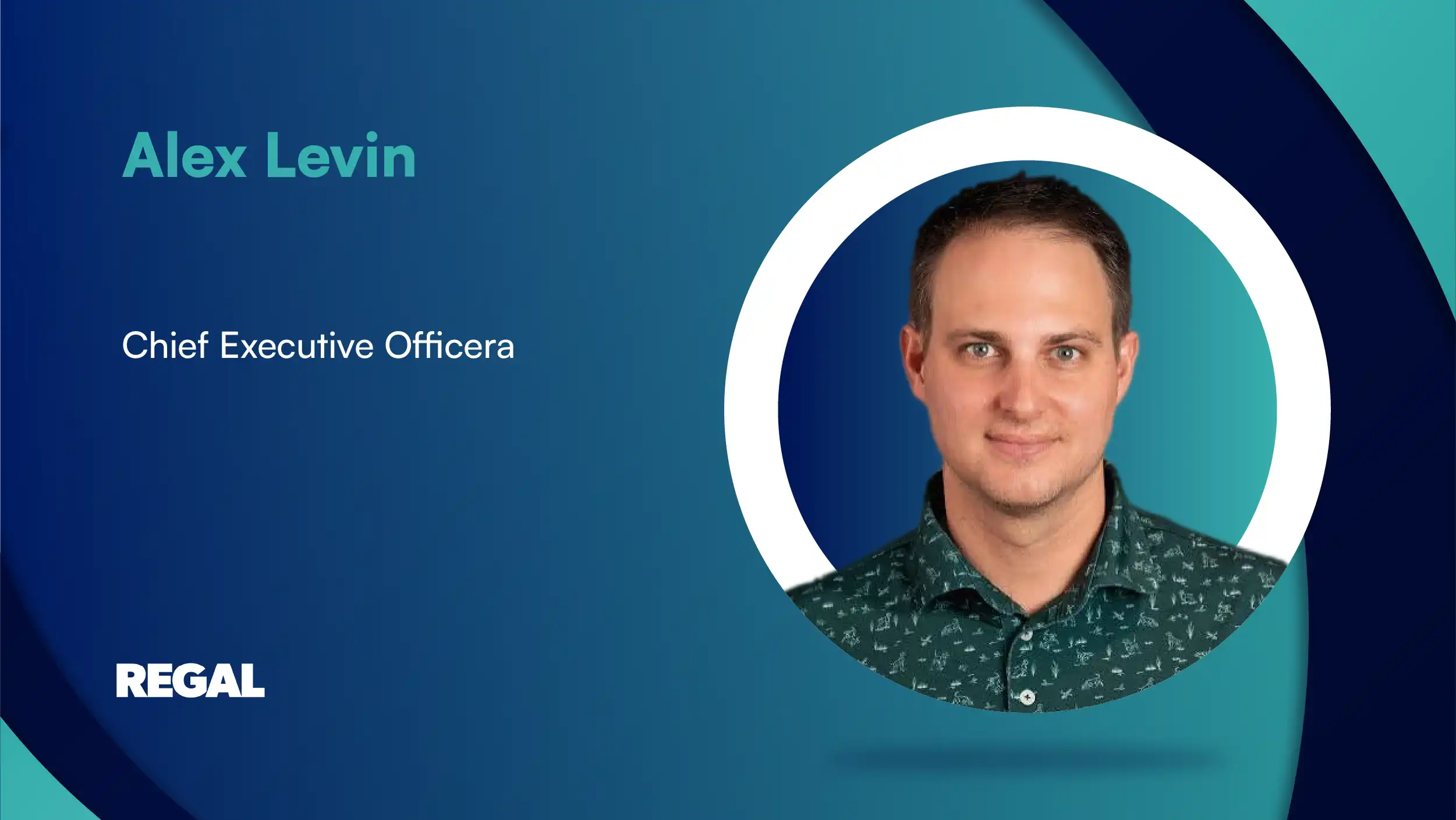

“Customers will continue to ‘rent’ models. It’s important to work with a platform that allows them to ‘own’ the customer data, and the workflows like we do.”
Alex, your career spans product and strategy at Thomson Reuters and Personal, Inc., followed by growth leadership at Handy and Angi before Regal. Which experience most shaped how you recognise a customer problem worth building a business around?
My cofounder, Rebecca, and I were at Angi where we had a 3,000-person contact center that handled nearly 100 million customer interactions every year. At the time, the entire industry was focused on pushing customers to cheaper self-service channels, doing everything they could to avoid live calls. The consensus was that voice was dead, but when I dug into the customer data, calls were very valuable for both us and customers.
Customers wanted to talk to someone about important, timely issues. We found better customer lifetime value when we had better conversations with customers. But it was very expensive and difficult to run with legacy technology and human agents. I wanted to build for a future where always on, contextual AI Agents were the front door for every business.
At Handy and Angi, you worked close to customer acquisition and service delivery. What did those years reveal about the role phone conversations still played as businesses moved towards digital-first customer journeys?
Customer conversations still are and always will be important. Digital tools can be great for straightforward, predictable tasks, but they fall short when a situation requires context, empathy, or the ability to take action.
Think about someone calling to update their health insurance after losing a spouse. They’re grieving, and the change involves sensitive details and special circumstances that don’t fit a standard form. A chatbot or FAQ can’t handle that. These are the moments where customers need personalized assistance and the reassurance that they can always reach a human.
Regal was founded in 2020, before voice AI became a mainstream enterprise priority. What did you see in customer engagement that made you believe the phone could become a more effective channel again?
Two things stood out. First, customers were still calling, over 70% of customer interactions were voice despite every company’s efforts to avoid it. Second, effective calls resulted in faster handling of interactions for the company and customer than any other channel.
But that requires customer context, always available support, perfectly trained agents, and other things that were hard to achieve with human agents alone. So we also made a bet that improving ML/AI, and improving memory would allow us to handle these interactions better than in the past.
A 2026 Gartner survey found that 50% of customers said GenAI made service interactions easier, while 87% considered access to a human essential. How should businesses balance AI-led service with the reassurance of human support?
There will always be humans actively overseeing the AI. But within a year customers’ won’t be able to tell between human and AI voice agents so the customer preference will be something of a moot point. Really the preference will be for companies that have invested in having the training and context necessary so the interactions are seamless when customers choose to engage in conversation instead of self-serve.
Regal has reported more than 500 million calls on its platform. At that scale, what have real customer conversations taught you that demonstrations and early pilots could not?
Real calls are messy in ways demos can’t replicate. Callers talk over the agent, use industry-specific phrasing, and speak in accents. None of that shows up in a controlled demo. Our scale matters because we have had to fix hundreds of these little nuances to make calls work well. And every call shows us something new, whether it’s how callers phrase things differently based on the industry they’re in, where a conversation stalls, or what makes someone drop off a call.
We use that to keep improving our agents and how we build them. So with 500 million calls behind us, we’ve seen a huge range of real situations, and every new agent we build starts from that experience. One thing it taught us is that real callers go off script, so teams shouldn’t have to choose between a rigid flow and a loose prompt. That’s why we’re rolling out Goal Oriented Agents, where one model keeps the conversation natural while a second keeps it on track toward the goal. Conversations feel more dynamic without losing control of the outcome, which opens the door to more complex use cases.
Also Read: MarTech360 Interview with Brian Quinn, President & GM at AppsFlyer
Regal's Copilot helps teams build, test, and improve AI agents. As AI begins helping create and refine other AI systems, how should teams preserve human judgement over quality, safety, and behaviour?
Copilot does the heavy lifting. It builds an agent from a script or past call recordings in minutes, stress-tests it against simulated customer calls, and flags where live calls hit friction, which is work that used to take teams weeks. That speed is the point, and it works because people are still in control of what goes live.
That’s why we built the human checkpoint into the workflow. Copilot suggests changes like stronger guardrails, and a person approves them in a click. Judgment stays with the team without slowing anything down, which allowed us to cut the improvement cycle from four weeks to one day. Every call is also recorded and every response is auditable, so humans can check the AI’s work at any point, which is really important in regulated industries that we work with like healthcare and insurance.
Regal's Voice CX Benchmark looks beyond natural-sounding speech. As enterprises move from pilots to production, which measures best reveal whether an AI agent is improving customer experience and business outcomes?
The measures that matter most, and what we measure our benchmark on, are accuracy, safety, clarity, coherence, personalization, and engagement. We also base it on real calls, not synthetic data. Most benchmarks ask whether an agent finished a task in a synthetic conversation. We looked at progress at every turn against real customer conversations: did the agent respond with empathy, ask the right follow-up questions, and avoid asking customers to repeat themselves? That’s how our Voice CX Benchmark scores models, and it shows you where a call goes wrong, not just that it did.
In healthcare, insurance, and financial services, a confident answer is not always the right one. How do you decide when an AI agent can act independently, needs to verify information, or should bring in a human?
Regal helps enterprises deploy AI agents that resolve work across complex enterprise systems by combining personalized customer context with generative conversations and deterministic controls. Our technology is deployed across the world’s largest financial services, local services, education, consumer and hospitality businesses, handling hundreds of millions of customer interactions.
Our customer, eHealth, is a good example of this. They implemented agents to handle medicare advantage enrollment season when millions of Americans were seeking coverage. The agents answered every call immediately, with 77% exceptional satisfaction ratings and a 27% higher purchase rate than with human screeners. And it’s set up to have tight guardrails around what is said, and how we handle healthcare information.
As voice models become more capable and widely available, what will distinguish an enterprise platform like Regal through its workflows, integrations, and real-world outcomes?
Customers will continue to “rent” models. It’s important to work with a platform that allows them to “own” the customer data, and the workflows like we do. Our long term customers invest massively in building unique views of the customer, and special methods for interacting with them that are best for their specific brand.
Alongside building Regal, you invest in early-stage companies through Blue Trail Partners. Has running an enterprise AI company changed what you look for in founders trying to turn promising technology into a durable business?
Many investors have been helpful in our journey, and a main motivator behind Blue Trail Partners has been to pay that forward whether we invest or not.
But for us to invest, we need to see more than an interesting market opportunity. We often see obsessive behavior in the founding team, and we have to believe that they will be able to sustain that for a decade as they march toward their vision. We want to see founders who have a strong perspective of how they will win (ie. why they are right), and even better if it’s counterintuitive.
So far that’s led to 10 acquisitions and 2 unicorns in our portfolio.
Thanks, Alex!
Alex Levin is a technology entrepreneur and business leader who serves as the co-founder and CEO of Regal AI. He brings extensive experience in product management, growth strategy, marketing, and business development. Before founding Regal, Levin held product roles at Thomson Reuters and Personal, Inc., and worked at Handy and Angi, where he led growth and marketing initiatives. His experience at Angi helped him recognize the importance of voice-based customer interactions and the limitations of traditional contact center technology, inspiring him to co-found Regal in 2020 with Rebecca Greene. Under his leadership, Regal develops AI-powered agents that help enterprises improve customer engagement, automate conversations, and deliver personalized customer experiences. Levin studied philosophy and psychology at Harvard University and is also an investor in early-stage companies through Blue Trail Partners.
