
MarTech360 Interview with Taylor Stewart, VP, Growth and Emerging Channels at TripleLift
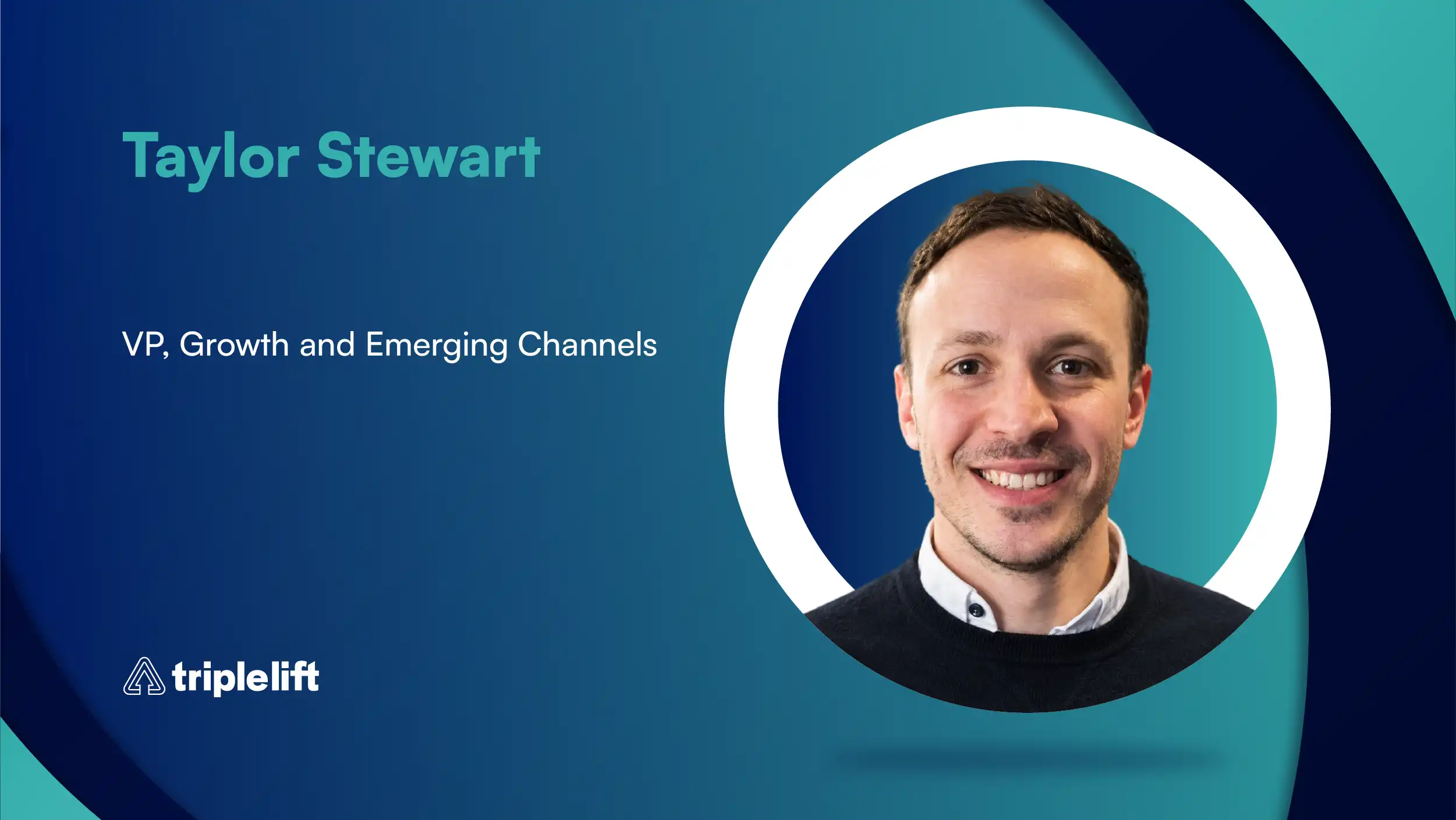

“Genuine scale doesn't come from fine-tuning an existing playbook into perpetuity; it comes from carving out dedicated space to test emerging opportunities in the wild, seeing how they resonate with the market and real customers, and iterating quickly.”
Taylor, your career has taken you from digital product development and sales at McGraw-Hill to programmatic solutions at MediaMath and Amazon, retail media leadership, and now growth at TripleLift. What early lesson still shapes how you recognize an opportunity that can genuinely scale?
The biggest lesson I learned early on is that you have to intentionally leave room for innovation. It sounds simple, but when you are heads-down driving quarterly targets, teams often default to optimizing what already works instead of giving themselves the breathing room to ask, what’s next? Genuine scale doesn't come from fine-tuning an existing playbook into perpetuity; it comes from carving out dedicated space to test emerging opportunities in the wild, seeing how they resonate with the market and real customers, and iterating quickly.
The biggest vulnerability I see across the industry today is a reluctance to test outside familiar boundaries. If you don’t build room to experiment, make mistakes, and learn something new, you leave massive growth on the table.
We see this playing out right now with offsite commerce media. The entire industry acknowledges that retail media performs exceptionally well in an owned-and-operated (O&O) capacity. Onsite search and display are proven and reliable. But sticking strictly to O&O limits your horizon. When you give yourself the permission to test offsite, you start to realize just how powerful first-party commerce signals actually are. Offsite activation allows you to find net-new customers across the broader web and engage high-value audiences you might not otherwise reach or track in a meaningful way. Recognizing an opportunity that can scale requires you to push beyond the initial comfort zone of what is already proven.
You spent nearly two years leading retail media globally before moving into growth and emerging channels. What changes in your thinking when the goal shifts from growing an established category to building the next source of growth?
When you manage an established category, your focus is primarily on optimization, yield, and driving efficiency within a known framework. When your mandate shifts to building the next source of growth, your mindset has to shift from optimization to orchestration and connectivity.
Retail media is a prime example of this. Onsite retail media is relatively mature - the playbooks are established, the budgets are allocated, and the metrics are understood. But offsite buying is still in its formative chapters. We are still uncovering the best ways to translate deep transactional and behavioral signals across the open internet.
A great example of this frontier is what we’re seeing with non-traditional commerce data, like our work with Uber. Uber isn't a traditional retailer, but they sit on immense, real-world data that reflects how people actually live, move, dine, and operate in their daily routines. Those signals are gold for brands looking to make authentic connections. At TripleLift, our focus is taking those rich audience signals and activating them across premium open-web inventory through existing programmatic workflows. Building the next wave of growth means delivering that kind of sophisticated targeting without burdening buyers with operational friction or unnecessary complexity.
TripleLift's October 2026 commentary cited industry research suggesting that 80% of commerce and retail media spending remains onsite, while only 15% of marketers think of commerce media as full-funnel. What do you think is holding brands back from influencing consumers earlier in their buying journey?
Commerce media has become very good at capturing demand. The bigger opportunity is using those same signals to influence consumers before they're ready to buy. Part of what's holding brands back is how retail media has traditionally been measured. When advertisers can tie spending directly to a transaction, it's easier to justify the investment. Moving further up the funnel introduces more complexity around measurement and proving what's actually working.
But consumers don't make purchasing decisions in a single moment. They're discovering products, comparing options and forming preferences across a much broader range of digital experiences.
That's where offsite commerce media comes in. By extending high-intent audience signals beyond owned platforms, advertisers can reach consumers earlier in the buying journey instead of concentrating their investment at the point of purchase.
Your analysis of Prime Day 2026 showed how offsite advertising can extend beyond traditional shopping categories. What does this reveal about the evolving role of commerce media, and how can brands turn event-driven momentum into sustained growth?
Prime Day has become a much bigger advertising opportunity than just reaching consumers who are actively shopping. Our 2026 analysis found that more than 61% of ad spend across the TripleLift inventory came from outside the Shopping category. Brands across industries are recognizing the opportunity to reach consumers during these moments, even when their goal isn't an immediate purchase.
We also saw advertisers begin ramping up activity two weeks before Prime Day, showing that brands are thinking more strategically about how to use these events. The bigger question is what happens afterward. Brands should be looking at which audiences responded, what creative worked and how offsite media contributed to their goals. Those learnings can help shape advertising strategies throughout the year, rather than treating major shopping events as isolated opportunities.
TripleLift combines creative technology with audience data and programmatic supply. What separates an ad format that simply captures attention from one that can genuinely change consumer behaviour and deliver business value?
Getting someone's attention is one thing, but giving them a reason to engage is another. An ad can look great, but if it's reaching the wrong audience or appearing in the wrong environment, it's probably not going to deliver the results an advertiser wants. The most effective advertising brings together an understanding of the audience, the context in which they're seeing the ad and creative that makes the message relevant.
That's what we're focused on at TripleLift. Our approach to impact orchestration brings creative, audience intelligence and curated supply together so advertisers can create experiences that are more relevant to consumers and better aligned with their goals. Creative has to be part of the strategy from the beginning. It's what turns audience insights into an experience that can actually influence consumer behavior.
Also Read: MarTech360 Interview with Anna Miller, Head of Ad Measurement at Roku
As retail media expands beyond retailer-owned environments, proving incremental impact becomes more complicated. How should advertisers distinguish sales influenced by a campaign from purchases that would have happened anyway?
Just because someone saw an ad before making a purchase doesn't mean the ad caused that purchase. That's an important distinction, especially as commerce media expands beyond retailer-owned platforms. Advertisers need to understand whether their campaigns are driving additional business or simply reaching consumers who were already likely to buy.
It's also important to measure campaigns against what they're actually trying to achieve. An awareness campaign shouldn't be judged by the same immediate sales metrics as a conversion-focused campaign. Ultimately, advertisers need a clearer picture of where their investment is making a difference, not just where they can claim credit for a sale.
TripleLift's 2026 curation research found that 99% of surveyed buyers considered curation important, but only 21% rated their execution as very effective. What do you think is creating this gap between what advertisers value and what they can actually achieve?
Advertisers see the potential in curation, but putting it into practice hasn't always been straightforward. Buyers want more control over inventory quality, audience relevance and performance, yet activating curated deals can still be complicated and difficult to evaluate. Our research found that 81% of buyers cited deals not meeting performance expectations as a major challenge, while 60% didn't know what they were paying for curation. If advertisers can't clearly see what they're getting or whether it's working, that's a problem.
That’s why we have a whole team at TripleLift that manages supply optimization - we understand that curation can be challenging but that shouldn’t put off advertisers from making it work. We see orchestration as the next step in making curation more effective. It's about bringing audience intelligence, creative and premium supply together so those elements work toward the same campaign goals, rather than being managed separately. The opportunity is to move beyond simply packaging inventory and give advertisers a more coordinated way to drive performance.
TripleLift's partnership with Uber Advertising extends Uber's audience signals across open-internet inventory. As more businesses turn their first-party data into advertising opportunities, what makes these partnerships genuinely valuable beyond simply expanding targeting options?
Partnerships like Uber Advertising give advertisers a way to use real-world consumer insights to reach relevant audiences across the open internet, including earlier in the buying journey. Uber has a unique view into how people move, order and shop. Those signals can help advertisers better understand consumer intent and target them wherever they spend time online.
With TripleLift, advertisers can now use Uber's audience signals across premium open-internet inventory, including high-impact display, native, standard display and online video. They can activate through curated PMP deals within their existing DSP workflows. What makes this valuable is the combination of Uber's audience insights with TripleLift's premium inventory and creative formats. Advertisers can reach relevant consumers beyond Uber's owned environments, whether they're building awareness, driving consideration or looking to influence a future purchase.
I think we'll see more partnerships like this as businesses recognize that their first-party data can support advertising opportunities beyond their own platforms. The real test will be how easily advertisers can put those insights to work and what results they deliver.
As AI changes how consumers discover products and how advertising platforms make campaign decisions, what do you see changing first? Which decisions will advertisers need to keep control over as more of the process becomes automated?
I think we'll see the biggest near-term changes in how advertising decisions are made behind the scenes. AI can process audience, creative and inventory signals much faster than manual approaches, which creates opportunities to make campaigns more efficient and improve performance.
At the same time, AI is changing how consumers discover products, compare options and make purchasing decisions. Advertisers will need to think differently about how they reach consumers as those behaviors evolve.
More automation shouldn't mean giving up control. Advertisers still need to set their objectives, decide how their data is used, determine where their ads appear and understand how success is being measured. AI can make campaign decisions faster and more efficiently, but advertisers need to remain accountable for the outcomes.
Q10. You've seen advertising from the perspectives of sales, platform solutions, enterprise accounts and retail media. What is one assumption about advertising growth that you believe the industry needs to rethink, and what could change if it did?
The industry needs to rethink the assumption that growth comes from creating more inventory or adding another advertising channel. More opportunities to serve an ad don't automatically translate into better results for advertisers.
The bigger opportunity is making better use of what we already have. Advertisers have access to more data, technology and media environments than ever before, but those pieces often operate independently. Connecting them more effectively can help brands reach consumers in more relevant ways and get more out of their investments.
As the industry evolves, I think we'll see growth increasingly driven by how intelligently we use those capabilities and the results they deliver, rather than simply how much more advertising we can put into the market.
Thanks, Taylor!
Taylor Stewart is an advertising and marketing professional at TripleLift, where she serves as Vice President of Growth and Emerging Channels. Her work focuses on growth strategy, digital advertising, and emerging media opportunities, including connected TV (CTV), commerce media, and retail media. She contributes to conversations around helping brands connect advertising investments with measurable business outcomes by combining audience insights, creative strategies, and cross-channel media activation. Taylor has experience in digital advertising planning and strategy, account management, and product-related functions. She studied at Vassar College, where she was involved in student government, campus activism, publishing, and writing.
