
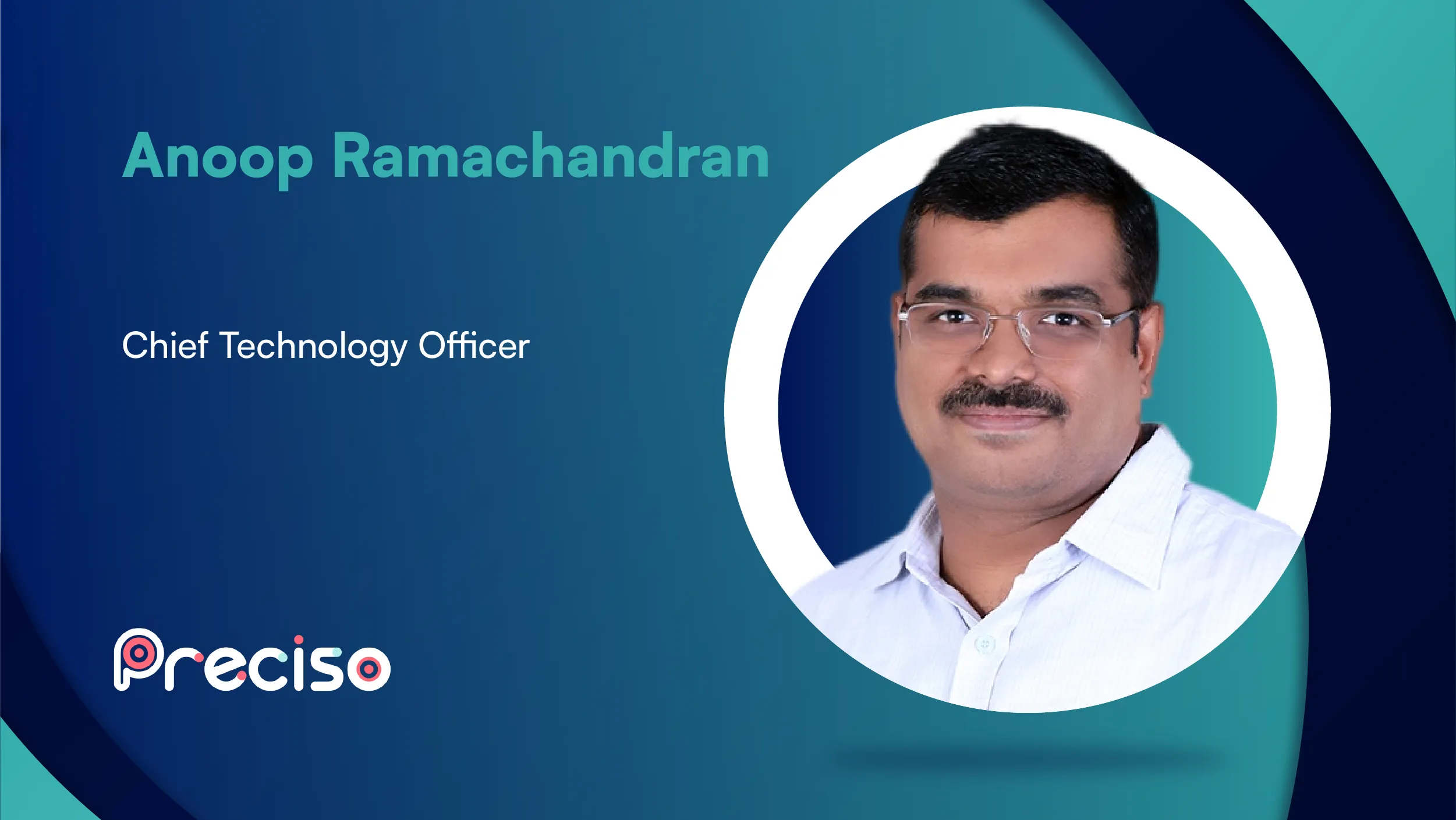
MarTech360 Interview with Anoop Ramachandran, Chief Technology Officer at Preciso

"When an ad fits naturally into the browsing experience and is relevant to the person seeing it, there's a greater opportunity to capture attention and encourage meaningful engagement."
How would you define native advertising?
Native advertising is advertising that matches the look and feel of the content surrounding it. It blends naturally into the browsing experience and is generally less intrusive than traditional banner advertising, while remaining clearly identifiable as advertising.
Native ads can be found across the open web, social media platforms and mobile apps - wherever people access ad-supported content. Their appeal lies in reaching audiences with relevant advertising that complements, rather than interrupts, what they are already doing.
What’s its appeal for publishers and advertisers?
For advertisers, native offers an opportunity to reach people with relevant messages that fit naturally into the content they're consuming. For publishers, it provides another revenue stream without relying on intrusive formats that risk putting audiences off.
Research from Business Research Insights suggests that native ads achieve click-through rates 53% higher than standard banner placements, while branded content generates 32% longer dwell times than static display.
That is potentially valuable for both sides of the equation: advertisers looking to generate leads and sales, and publishers looking to build sustainable revenue streams. When campaigns perform well, advertisers are more likely to return, creating opportunities for longer-term relationships.
Native advertising can also improve the user experience. When an ad feels like a natural extension of the surrounding content, it is more likely to attract meaningful engagement than one that interrupts what someone is doing.
Also Read: MarTech360 Interview with Tim Ringel, Founder and Global CEO at Meet The People
How popular is it - do you have any stats to show a trend towards adoption of native?
According to Grand View Research the global native advertising market was valued at $105.9 billion in 2024 and is projected to reach $141.1 billion in 2026, growing to almost $347 billion by 2033.
That growth reflects increasing demand for advertising that delivers better results without disrupting the user experience. Advances in AI are also making native advertising more accessible, allowing advertisers to create more relevant campaigns and optimise their performance in real time.
For publishers, this creates new opportunities to monetise their content through native placements that complement the browsing experience, while giving advertisers more effective ways to reach and engage their target audiences.
Can you share any examples of the results native advertising can deliver?
We've seen encouraging results from testing our own native advertising platform, Ultima. In our published tests, Ultima achieved a click-through rate of 2.1%, compared with a stated industry average of 1.84%. Engagement rates reached 65.94%, against a stated industry average of 60.03%, while average session duration was 3 minutes 46 seconds, compared with the industry average of 2 minutes 40 seconds.
These results demonstrate the potential of combining native formats with more relevant targeting and creative. When an ad fits naturally into the browsing experience and is relevant to the person seeing it, there's a greater opportunity to capture attention and encourage meaningful engagement.
How does AI improve native advertising?
AI is particularly useful for native advertising because relevance is so important. The relationship between the ad, its surrounding content and the user’s interests plays a big part in whether someone engages with it. AI can help marketers make better decisions about all three, without replacing human judgement.
In practice, AI can automate the production of creative, generating and testing multiple variations to identify which messages resonate with different audiences. Machine learning can also optimise bidding and placements in real time, helping advertisers focus their investment on the environments and audiences delivering the strongest results.
This is the approach we've taken with Ultima, which uses machine learning to create personalised campaign creatives and optimise their delivery. It also enables advertisers to refine campaigns as they run, rather than waiting until they have finished to identify what worked.
AI can also help reduce wasted impressions and unnecessary spend. By filtering out low-quality traffic and focusing on high-intent users, advertisers can achieve stronger results without simply increasing the number of ads they serve.
What does the future look like for native advertising?
Native advertising has plenty of room to grow, particularly as AI makes it easier to create, target and optimise campaigns at scale. One of the biggest opportunities is making these technologies more accessible to advertisers and publishers.
That is something we're already working on with Ultima for Publishers, making it simpler for publishers to introduce native advertising into their websites.
For publishers, this means new opportunities to generate advertising revenue without compromising the experience that keeps audiences coming back. For advertisers, it's about reaching relevant audiences more efficiently, with greater control over where their budgets go and how campaigns perform.
Ultimately, I think the future of native advertising lies in making every impression count. By delivering more relevant advertising in the right environments, we can reduce wasted spend, improve performance and create a better experience for consumers.
Thanks Anoop!
Anoop is Chief Technology Officer (CTO) at Preciso, tasked with developing, maintaining and evolving the company’s adtech platforms. Aligned with Preciso's vision of prioritising advertisers, Anoop spearheaded the development of Preciso’s Smart-Bid technology, designed to bid, optimise and learn, ensuring the best results for advertisers. His recent achievements include adapting and integrating AI and ML technologies across Preciso’s platforms.
Throughout his 19-year adtech career, Anoop has repeatedly demonstrated an ability to adapt and build cutting-edge environments, infrastructure, software and tools.
