
Social Commerce vs. Brand-Owned Commerce: Which Model Will Shape the Future of Online Shopping?
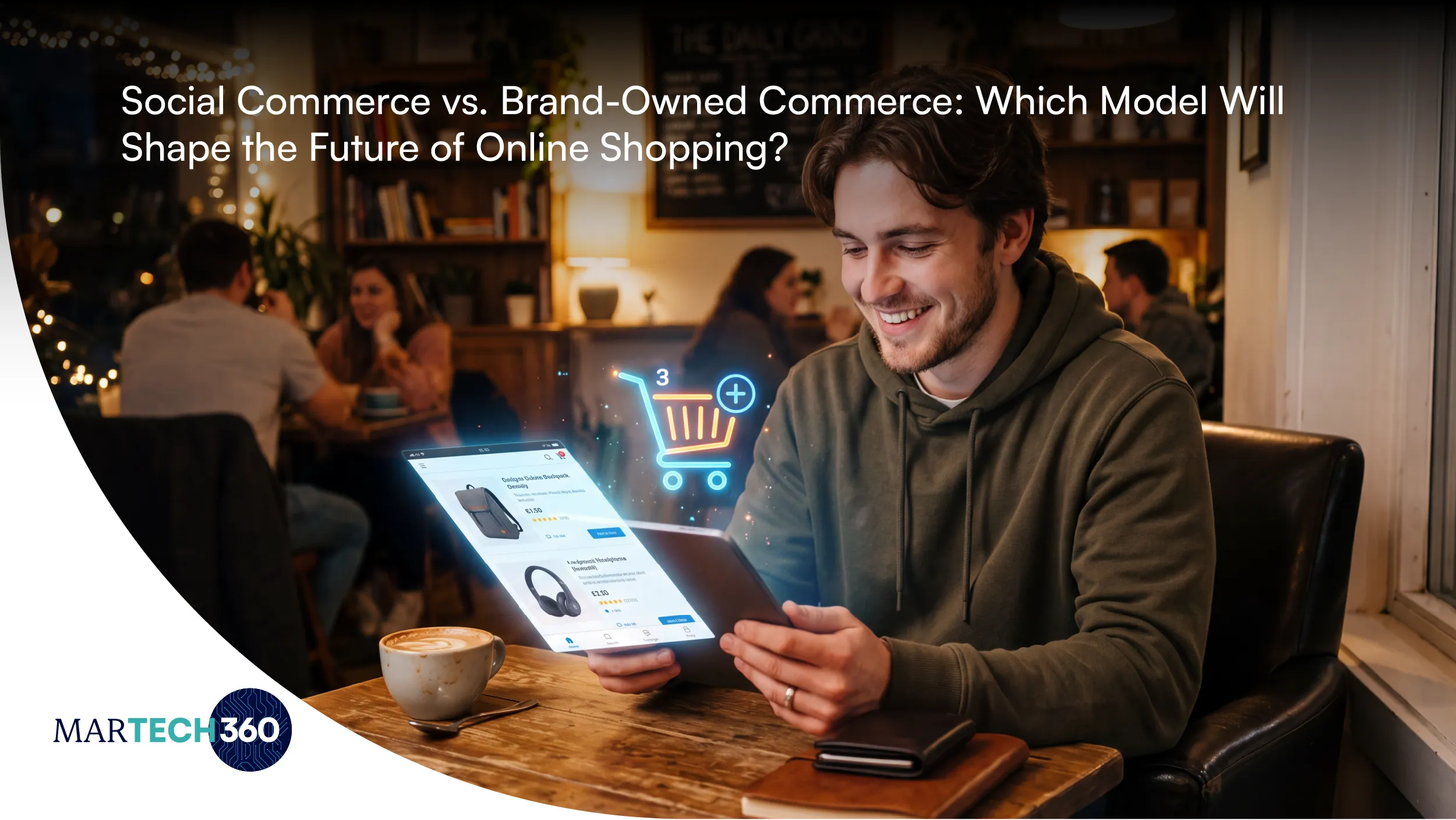

Social commerce captures products within the customer’s attention loop. Brand-owned commerce, however, offers businesses more control of the shopping experience and the relationship with the customer. It appears to be an easy choice on paper. In real-life, it is not.
One customer found a product thanks to a creator, then searched for it elsewhere, looked for that brand and purchased whichever route was most convenient. That renders the old-fashioned argument about ‘which channel wins’ a little less relevant. More relevant is understanding what each brings to the table, where they stumble, and how to seamlessly unify them so the customer doesn’t get lost.
Defining the Contenders
Social Commerce
Social commerce changes where shopping begins. The customer doesn’t have to go into a store with the ‘buy’ in mind. A product can get into the journey whilst you’re watching a creator, scrolling through Instagram or browsing TikTok.
TikTok Shop and Instagram commerce experiences have put a thrust to by bringing the discovery, recommendation, product data, and purchase stages closer together. Creators introduce an additional element by allowing a customer to experience and contextualize the product even before they reach the brand’s website.
That is the true power of social commerce. It can take attention and convert it into quick conversions of products that are simple to explain and show.
The punch line here is that you have to play in someone else’s backyard. The platform holds the keys to the environment, their rules and most of the distribution. Social commerce can therefore be a powerful acquisition engine without necessarily becoming the best place to build the entire customer relationship.
Brand-Owned Commerce
It’s Your Storefront, Your Rules The channels may be owned by the brands, but their stores aren’t. Begun with buy online pick up in-store and brands can steer sales through their own ecommerce channels too. Giving brands more oversight and control over the customer journey including navigation, merchandising, product discovery, checkout and post-sale.
The real value lies underneath, at the data layer.
Shopify refers to first-party data as data that you are collecting within your own touchpoints, including your websites, your buyers’ interactions on-site, and your buyer’s post-sale and post-purchase behaviors. You can use that data to personalize future experiences.
That makes an owned store more than a place to complete transactions. It can become the system where customer knowledge builds over time.
Social commerce can help a brand find a buyer. Owned commerce gives it more room to understand that buyer and build the next interaction around what it already knows.
The Martech Battleground
|
Factor |
Social Commerce |
Brand-Owned Commerce |
|
Acquisition |
Social discovery, creators and algorithms |
Search, direct traffic and lifecycle marketing |
|
Data |
Dependent on platform access |
First-party customer signals |
|
Experience |
Platform-led |
Brand-led |
|
Conversion |
Fast and context-driven |
More controlled and considered |
|
Customer value |
Strong at acquisition |
Stronger at retention |
Social commerce has changed the economics of getting noticed. A brand does not always need to wait for someone to search for its product. The product can reach the customer first.
Meta also shared that retailers’ brands leveraging Reels, along with creators, experienced a 71% higher brand-intent lift and 19% lower acquisition costs.
So that may also clarify why social grew to become greater than a content material channel. If creators, suggestions and commerce get along with each other, the platform can sway the shopper earlier than even a purchase intent is kind.
Owned commerce plays a different part. Search, direct traffic, email and lifecycle campaigns are likely to perform better when there is already some level of awareness or intent established. It’s a trade-off – social can generate demand and owned channels give you control.
Data Ownership and Privacy
The data question is less about how much information a brand will be able to gather, and more about what it will be able to link up with and leverage.
You can see the main performance and customer signals on social. But you do not control the rules of the platform. With an owned setup, your business can watch how people browse, buy, and act after purchase on your own sites.
Google said that advertisers matching app and offline data to Data Manager experienced a 26% lift in incremental ROAS.
The problem here is not the fact that first-party data is positive. The real advantage is in the signals within an integrated business. And these signals can assist in bettering your measurement and decision-making. This is particularly crucial when the brand needs a to understand the customer after the initial purchase.
Control and Brand Experience
The phrase ‘rented land’ has become common in social commerce discussions for a reason. A brand can build a large audience on a platform while having limited control over how that audience is reached.
Algorithms change. Interfaces change. Commercial policies change. The brand has to adapt.
An owned storefront gives the business more room to make those decisions itself. If customers struggle to navigate the site, the brand can change the structure. If product information is unclear, it can rewrite the page. If checkout creates friction, it can redesign the process.
That does not make an owned website automatically better. Poor execution can create more friction than a social checkout. The advantage is that the brand controls the levers.
Personalization and Conversion

Social commerce is ideal for when the sales journey is short. Someone shows the product, the recommender is relevant and the sale can take place before the excitement wears off.
In Prime Day 2026, the Influencers drove 11x more buyers than social networks in total.
This is useful since it decomposes a grouping that is often considered one channel. Social traffic, creator influence and commerce do not have the same results. The context around the recommendation matters.
Owned commerce has more room when the decision takes longer. Customers can compare products, read detailed information, explore bundles or return later without having to rely on the limited context of a social feed.
So the better question is not which channel converts better in every situation. It is which environment suits the customer’s decision.
Customer Lifetime Value
The numbers may look great, yet there could be a fundamental issue. You can acquire new clients and scale the enterprise through acquisitions, without improving your retention.
And this is where customer lifetime value is coming to the rescue.
This can drive one great first buy, but the brand still needs a way to convert that into a longer-term relationship. It gets this to an extent through its owned channels, via email, SMS, loyalty, accounts and CRM.
The objective is not simply another sale. It is to make the next interaction more relevant because the brand has learned something from the previous one.
That changes the economics of growth. Instead of constantly paying to find the next customer, the business has a better chance of increasing the value of customers it has already acquired.
The Risks of Rented Land
The biggest social commerce risk is not that platforms are unreliable. It is that they can become too successful for a brand’s own good.
When one channel consistently delivers customers, businesses naturally invest more in it. Over time, that can create dependence. An algorithm change can reduce visibility. Platform fees can affect margins. New policies can change how products are promoted, sold or returned.
The brand may still have an audience, but the relationship is mediated by someone else.
That distinction matters. A large follower count is not the same thing as a customer database. Reach can create awareness without creating durable customer value.
Social commerce should therefore be treated as an important distribution channel, not as the entire foundation of the business.
The Winning Strategy Is a Hybrid Ecosystem
The strongest approach is not to make social and owned commerce compete for the same job. Give them different jobs.
Social is most effective for discovery and purchase. Products that are at a low barrier to adoption work well here because people can get it easily and buy without much research.
It gains additional significance following that initial interaction. After the consumers have bought into the brand (by using the brand on their online store, subscription platform or in retail) the brand is then in a position to establish the relationship by way of post purchase email, SMS, loyalty programs or accounts.
This change in discovery makes it even more important. Salesforce found that discovery through brand-owned properties declined 7% between August 2025 and May 2026, while discovery through newer channels such as AI assistants, social media AI and delivery apps increased 38%.
That finding changes the strategic question.
Companies should not expect their own website to be the default point of entry for every customer. They should also be wary of trying to direct every discovery path through their own platform. They need owned, but not the only, ecosystem.
Which means ensuring that inventory is synchronized across channels, providing uniform product information and linking the right signals from the customer if the customer has given their permission.
The company doesn’t have to own every place where the customer experiences it. It just has to own enough of the relationship to continue to deliver value.
The Future Will Not Be Owned by One Channel
The social commerce v brand-owned commerce clash makes more sense if you look at both types of commerce as two distinct stages of a singular customer experience.
Accelerate and amplify discovery Social commerce can help you find products faster and make them easier to discover. Creators and platforms can help you uncover new products before you even begin shopping.
The commerce, which is secured by the brand, becomes a more detailed environment through which to draw on customer insights and design the experience that will lead to a better retention.
Neither model solves the entire problem.
Brands that rely entirely on social risk building growth on infrastructure they do not control. Brands that rely entirely on their own websites risk ignoring where discovery is actually moving.
The more realistic future is connected commerce. Use social to reach people where attention already exists, then give those customers a compelling reason to build a relationship with the brand itself.
Reach can be rented. The real competitive advantage comes from what the brand manages to build after the customer arrives.
