
MarTech360 Interview with Dominic Leung, Executive Director of Strategy and Transformation at Monigle
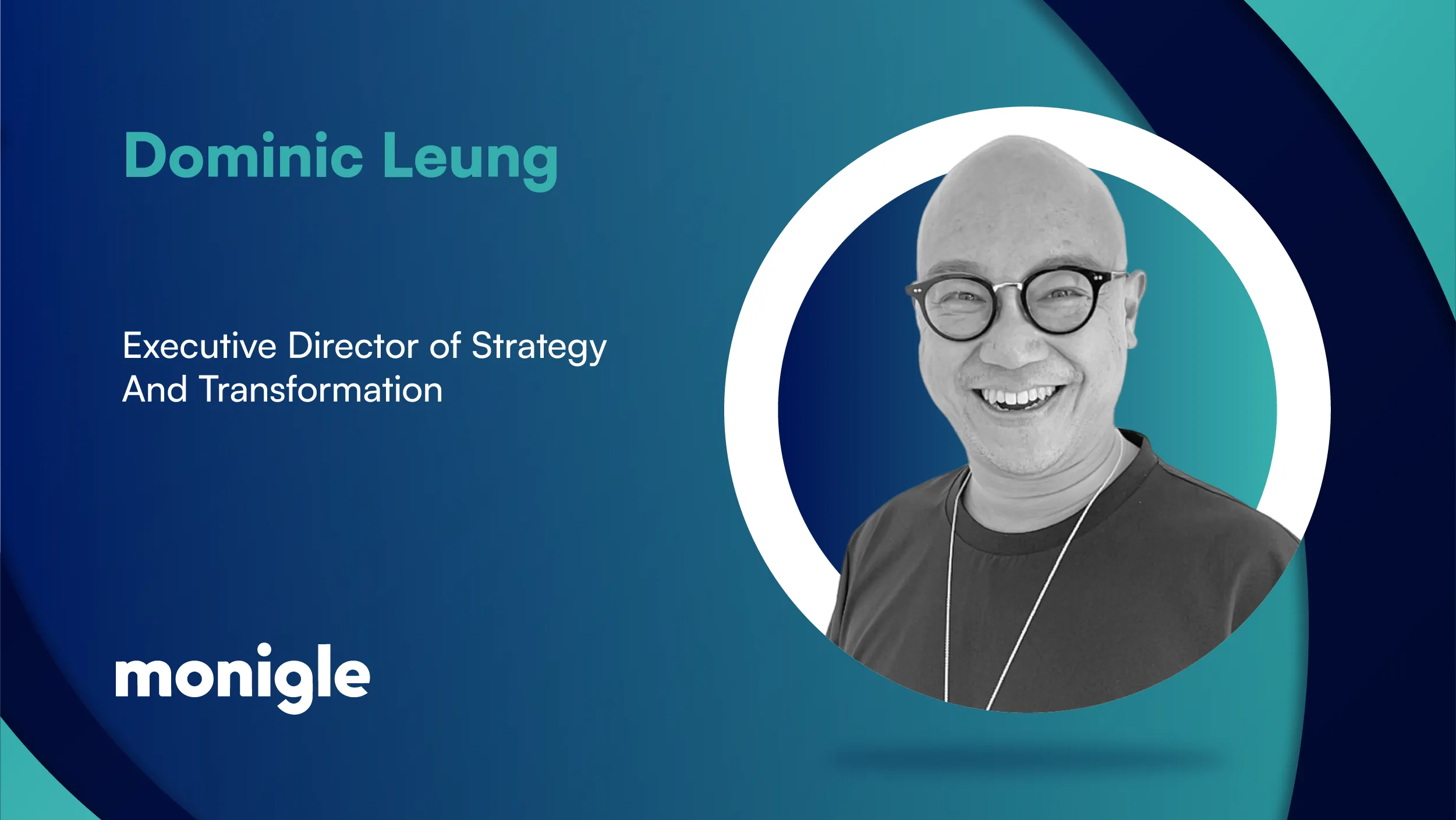

“AI comes for tasks, not jobs. The core outcomes that marketing and business leaders are responsible for delivering-growth, trust, reputation, and human connection-remain absolute necessities for enterprise survival. The jobs themselves remain; it is simply the mechanics of how we deliver those outcomes that are changing.”
Dominic, could you tell us about your professional journey and your current role as Executive Director of Strategy & Transformation at Monigle? What initially drew you to the intersection of brand, consumer behavior, and business transformation?
My background is slightly unconventional for this room: I originally trained in the medical sciences. In scientific research, you operate through a strict, diagnostic "if/then" lens. When you study complex physiological systems, you learn that biological networks can’t be forced through blunt force; they respond to surgical, micro-level calibrations.
When I transitioned into advertising, management consulting, and brand and experience strategy, I was deeply drawn to the creative industries. The sheer energy, raw imagination, and creative chaos were intoxicating. But I also recognized a gaping opportunity: if you can apply scientific rigor to structure that creative chaos, you transform creative energy from a speculative marketing expense into an engine of predictable enterprise value.
Across my career-from advising private equity firms on M&A brand valuation to leading strategy across global hubs in Sydney, London, and New York. My current role at Monigle is focused on closing what I call the 92/8 Enterprise Gap. Building on foundational research showing the dramatic shift in market valuation over recent decades, intangible assets (brand, culture, systems, experience, IP) now account for roughly 92% of all S&P 500 market value, up from just 17% in 1975. Yet most corporate governance models and operational frameworks still manage businesses as if physical assets dominate, attempting to force human behavior through top-down mandates.
At Monigle, my role as Executive Director of Strategy & Transformation is about taking that scientific rigor, fusing it with creative chaos, and translating human behavior into a closed-loop operational engine. We don't view brand as a marketing line item; we treat it as an operating system designed to drive compounding enterprise value.
We are seeing AI rapidly become embedded across marketing-from content creation and personalization to analytics and customer experience. In your view, what changes most fundamentally when AI moves from being a competitive advantage to simply becoming table stakes?
When a breakthrough technology shifts from a novelty to table stakes, it stops being a differentiator and simply raises the baseline for efficiency. We have seen this exact cycle play out before with big data, IoT, and customer experience technologies: every new stack promises to eliminate commoditization, only to quickly raise the baseline and recreate a new, high-tech "sea of sameness."
To understand why, we have to look at Joe Pine’s Progression of Economic Value. Commodities are replaced by products, products commoditize into services, services shift into staged experiences, and ultimately, experiences evolve into guided transformations. Technology inherently acts like a product-it commoditizes at light speed. When everyone has access to the same hyper-automated LLMs, speed and volume lose their economic premium.
What changes most fundamentally is where value creation actually lives. When execution becomes instant and cheap, the bottleneck shifts entirely from production capacity to human judgment, strategic imagination, and continuous adaptation.
AI is a cognitive supplement, not a human replacement. Crucially, it is the active, lived process of human creativity-the deliberate cycle of learning, unlearning, relearning, and synergizing with technology-that keeps the human element as the true differentiator in the ecosystem. The magic doesn't happen inside the model; it happens in the surrounding human dimensions: how you apply it, how you service it, how you curate the experience, and how you guide the customer’s ultimate transformation.
The companies that win won't be the ones generating 10,000 personalized emails a second. They will be the ones using AI to free up human bandwidth so they can engineer meaningful, high-trust human experiences across their entire operational value chain.
Also Read: MarTech360 Interview with Crystal Ricevuto, Vice President of Marketing at Levitate
As more brands gain access to essentially the same AI tools, capabilities, and data-driven techniques, are we entering an era of “AI sameness”? What do you believe will ultimately separate one brand from another?
We aren't just entering an era of "AI sameness", we are already caught in the gravitational pull of algorithmic homogenization. Large language models and predictive algorithms are, by definition, engines built on historical consensus. They predict the most statistically probable next word, pixel, or decision based on past data. If every brand feeds its strategy into the same underlying models, every brand will eventually look, speak, and act like the statistical average of its category.
What will ultimately separate one brand from another is irrational distinctiveness and operational proof.
Algorithmically generated copy and hyper-optimized collateral cannot build an intangible asset. What builds enterprise value is a brand’s willingness to make opinionated, non-obvious choices that an algorithm would never recommend. In our Living System of Experiences (LSE) framework, we map experience across four distinct dimensions: Sensorial, Intellectual, Emotional, and Behavioral. AI can assist with the intellectual and predictive mechanics, but it cannot authentically anchor the emotional, sensorial, or behavioral mechanics that forge lasting memory.
The brands that escape "AI sameness" will be those that use technology to streamline backend mechanics while doubling down on their core human ideology-closing the Promise-to-Proof Gap by ensuring their operational touchpoints consistently deliver on their brand promise in unexpected, deeply memorable ways.
Personalization has long been positioned as the key to creating better customer experiences. But can personalization actually make an experience feel less human when it becomes too predictable, automated, or intrusive? Where should brands draw the line?
Absolute personalization, when driven purely by automated tracking and algorithmic prediction, frequently devolves from relevance into surveillance. It crosses the line the moment it shifts from being useful to feeling uncanny, mechanical, or transactional.
This happens because algorithms optimize purely for predictability within a closed technical loop, whereas true human connection requires context. The fundamental flaw in most personalization strategies is that they treat the algorithm as the complete ecosystem. In reality, the human customer operates in a dynamic, multi-variable context outside the technology-carrying mood, environment, social nuance, and shifting intent that a tracking pixel can never capture. When you try to personalize without connecting the technological ecosystem to that broader human context, you get friction instead of intimacy.
This is why, returning to the Transformation Economy framework, true personalization isn't about predicting a past purchase; it is about guiding the individual's ongoing transformation. In that paradigm, the individual is simultaneously the product, the context, and the ultimate ecosystem.
Brands need to draw the line by separating functional utility from emotional intimacy through two distinct lenses:
- Utility should increase Ability (silently): Applying BJ Fogg’s B=MAP model, personalization should primarily be used to increase Ability-silently stripping away operational friction so it is effortless for a customer to achieve their goal.
- Intimacy must respect Context (and be earned): Never use automated systems to fake human empathy. Nothing triggers a customer's corporate immune response faster than a machine feigning deep, emotional understanding of their personal life based on a data trigger.
If your personalization trap eliminates serendipity to keep a user in a predictable feedback loop, you haven't engineered a relationship; you’ve built a clinical cage. The goal of technology is to reduce friction, not to colonize every second of the customer’s attention with automated noise.
At Monigle, much of the work centers on creating brands that remain relevant as markets and consumer expectations evolve. How should marketers rethink the role of brand when AI can generate content, messaging, and creative assets at unprecedented speed?
Marketers must make a dual mindset shift: they must fundamentally rethink the role of brand, but equally, they must rethink the true role of AI itself.
When a new technology enters the enterprise, the immediate impulse is almost always to chase low-hanging efficiency-doing the same old work faster, cheaper, and at higher volume. But raw efficiency is a trap that leads straight to asset bloat and brand dilution. True, durable value is never created by applying technology through the lens of efficiency; it is created by applying it through the lens of effectiveness.
AI shouldn't be treated merely as a high-speed generation engine. Its true power lies in interrogation-acting as a cognitive sparring partner to stress-test ideas, challenge assumptions, interrogate strategy, and sharpen strategic intent. When used for effectiveness rather than raw throughput, AI becomes a human enabler that elevates judgment rather than replacing it.
This shift in technology forces a corresponding evolution in brand. Brand is not a static set of guidelines sitting in a PDF, nor is it a factory pushing out collateral. Brand operates on two distinct, interlocking dimensions:
- The closed-loop operating system: Brand is the underlying architecture that codes intangible assets-culture, human capability, and innovation-into daily cross-functional execution. While AI automates discrete tasks, it cannot integrate the broader living system. Brand provides the system boundaries and quality controls.
- The modality of influence and human context: Brand is the active agent of influence that galvanizes internal silos, bridges HR, Ops, and IT, and provides the human translation layer. It mirrors how people actually think, feel, and relate, giving technology the contextual grounding it inherently lacks.
When content generation becomes commoditized, brand stops being a marketing output and becomes the primary mechanism for guiding human change. Marketers who win won't be those who use AI to flood the market with automated noise, but those who use AI to interrogate their strategy-and rely on brand as the ultimate agent of influence to unite their organization and deliver genuine effectiveness.
Through your work with “Confessions of a CMO,” you have had access to candid perspectives from senior marketing leaders. What are CMOs really worried about right now that may not always be visible in public conversations about AI and marketing transformation?
In public, the conversation around AI focuses heavily on efficiency gains, tool stacks, and pilot programs. But in our global qualitative research study-which we conducted in partnership with Jon Evans from The Uncensored CMO-we uncovered the true underlying friction: CMOs are grappling with the Authority Paradox.
The CMO is held accountable by the CEO and Board for driving growth and managing multi-billion-dollar intangible enterprise value, yet they are systematically denied direct operational control over the backend enterprise systems-IT, product, customer service, operations-that actually deliver the experience.
When you inject generative AI into that equation, CMOs aren't worried about losing their jobs to an algorithm. They are worried about three deep operational crises:
- The corporate immune system: Pushing rapid, tech-driven transformation often triggers an internal immune reaction from legacy operations, IT, and finance, paralyzing execution and creating organizational friction.
- The erosion of trust: They worry that the rush to automate every touchpoint is quietly eroding long-term brand equity and customer trust in exchange for short-term vanity metrics and volume gains.
- The fragmentation of strategy: As martech spreads across the enterprise, other C-suite leaders try to claim pieces of the customer journey, fragmenting the overall strategic narrative and user experience.
One of my favorite insights from our research is that "Marketing is the lightning rod for every irrational thing a company does." Because marketing sits at the precise intersection of enterprise operations and human behavior, the CMO is the first to feel operational fractures. The leaders surviving and thriving through this transition understand that marketing authority can no longer be demanded top-down; it must be built through cross-functional influence coalitions across the C-suite-uniting the COO, CIO, and CHRO around shared human outcomes.
Today’s CMO is increasingly expected to balance brand building, growth, technology, customer experience, and measurable business outcomes. How is the CMO role evolving, and what capabilities will define the most effective marketing leaders over the next few years?
The myth that "the CMO is dead" is fundamentally wrong. What is dead is the idea that marketing can exist as a functional silo.
The core mandate of the CMO hasn't vanished-it is very much a "yes, and" equation. The CMO still owns the fundamental responsibility to champion the customer, build brand equity, safeguard reputation, and drive sustained top-line growth. Those foundational pillars remain non-negotiable. What has changed is the environment in which that mandate must be delivered.
To succeed today, CMOs are expanding their operational repertoire. They are adapting to become the key orchestrators who usher the entire organization through change. Through our Confessions of a CMO qualitative research, we mapped an Adaptive Leadership Taxonomy that illustrates how top leaders are successfully expanding their influence without losing their core marketing focus.
The most effective marketing leaders over the next decade will be defined by three expanded capabilities:
- Expert generalism and systemic thinking: The ability to connect disparate dots across medical science, technology, behavioral design, and corporate finance. They must speak fluently to the CFO about intangible asset valuation and to the CIO about martech architecture-without losing sight of human needs.
- Leading through influence, not mandates: Formal P&L authority yields only minimum-viable compliance. The best CMOs build cross-silo coalitions across HR, IT, and operations, aligning the enterprise around shared human outcomes rather than fighting over internal territory.
- Surgical precision calibration: Instead of subjecting the organization to disruptive, multi-year "big-bang" overhauls that lag market dynamics and break the revenue run-rate, adaptive CMOs execute continuous micro-adjustments across key operational levers to drive steady, compounding transformation.
With AI making it easier for brands to optimize every interaction, how can marketers ensure they are not optimizing away the moments of surprise, emotion, and human connection that make a brand memorable?
AI is certainly making it easier for brands to optimize interactions, but it is also making it easier for people themselves to advance their own capabilities. When human ingenuity combines with the leverage of AI, it elevates what teams can conceive, test, and build, taking experience design into entirely new territory.
Whether optimization erodes human connection comes down to how leaders deploy technology. AI is simply a tool applied toward specific outcomes. At Monigle, we evaluate everything marketers need to achieve through a structured experience lens, recognizing that different moments require distinctly different outcomes:
- Some experiences are engineered specifically to drive memorability through surprise and distinctiveness.
- Others must motivate people to take a decisive action.
- Some exist to drive operational ease or baseline satisfaction.
- Others are designed to move customers seamlessly along their journey to deepen long-term engagement.
AI cannot replace the strategic intent behind these outcomes. Its true role is to accompany human leaders, giving them the bandwidth to interrogate solutions, stress test creative programs, refine incentive structures, and elevate ideas so they deliver maximum impact.
To preserve genuine human connection, marketers should adopt a model of surgical precision tuning:
- Automate for ease to liberate creativity: Use AI to strip away functional friction and streamline baseline tasks where ease and speed are the primary metrics.
- Interrogate ideas for memorability and Motivation: Use technology as a cognitive partner to refine high-stakes touchpoints, ensuring signature moments have the emotional weight required to build memory.
- Evaluate through a balanced outcome framework: Stop measuring all touchpoints by transactional speed alone. Assess whether an interaction was meant to deliver ease, build trust, or drive lasting emotional resonance, and calibrate your operational levers accordingly.
If optimization improves speed by 10% while flattening emotional resonance to zero, you are not optimizing the business. You are simply accelerating the erosion of long-term brand equity.
If technology becomes increasingly commoditized, could trust, authenticity, and emotional connection become the next major sources of competitive advantage? What are the brands getting this right today doing differently?
Trust, authenticity, and emotional connection are not new sources of competitive advantage. They have always been the ultimate drivers of enterprise value. Technology, when deployed effectively, provides a shorthand first-mover advantage, but that initial window closes quickly as adoption spreads across a market.
The fundamental mistake many leaders make is treating each new technological wave as a silver bullet. In reality, the true role of technology in sustained business transformation is capability building.
If you deconstruct trust, it is built on two equal pillars: the character of an organization and the capability of an organization. Capabilities are driven by the synergy of three core elements: people, processes, and tools. Technology is simply a tool within that system. It is never a standalone solution. Competitive advantage does not come from the tool itself, but from how effectively an organization integrates its people, processes, and tools to consistently demonstrate its character and deliver on its promises.
The brands getting this right today understand that technology, human talent, and brand strategy must work synergistically as a whole. They are doing three things fundamentally differently:
- They bridge the Promise-to-Proof gap: They recognize that authenticity is not an ad campaign. It is the operational alignment between external brand promises and backend capabilities across every customer touchpoint.
- They operate as Living Systems: Rather than treating brand and transformation as static, multi-year projects, they continuously calibrate their operational behavior, using technology to strengthen internal execution as cultural and economic conditions evolve.
- They build capability through culture: They recognize that employee behavior is the primary mechanism through which organizational character is communicated. They invest in a culture of adaptation, equipping their people with the right tools and processes to build genuine, long-term trust.
Looking ahead, what should marketing leaders start doing now to build brands that remain distinctive, trusted, and genuinely human in an AI-saturated marketplace?
We need to recognize a fundamental truth about this transition: AI comes for tasks, not jobs. The core outcomes that marketing and business leaders are responsible for delivering-growth, trust, reputation, and human connection-remain absolute necessities for enterprise survival. The jobs themselves remain; it is simply the mechanics of how we deliver those outcomes that are changing.
With that in mind, marketing leaders need to take four immediate, practical actions to future-proof their organizations:
- Audit the Promise-to-Proof Disconnect: Step away from the martech dashboards and conduct a rigorous audit of your high-impact customer and employee touchpoints. Identify where automated tools and AI channels are making promises that your backend operational systems fail to deliver. Fix those operational fractures first.
- Build an Internal "influence coalition": Stop waiting for top-down board mandates or expanded P&L authority. Sit down with your heads of Operations, IT, and HR this week. Establish a shared alignment around human-first experience outcomes. Frame brand strategy not as a marketing expense, but as a cross-functional operating engine that improves operational efficiency and employee retention.
- Shift from "big-bang" overhauls to continuous calibration: Stop chasing multi-year rebrands that trigger the corporate immune system. Adopt a living system mindset. Take one key experience touchpoint, map it against its underlying operational mechanics, execute surgical micro-adjustments, measure the human and financial response, and continuously iterate.
- Deploy AI for dual-purpose capabilities: Stop viewing AI strictly as an output engine for asset generation. Reframe its role as a tool to advance and elevate human capability itself-using technology as a cognitive partner to automate low-level tasks, sharpen human judgment, interrogate strategic assumptions, and expand what your teams are capable of creating.
Real organizational velocity doesn't come from pushing algorithms to their absolute limit. It comes from bridging scientific rigor with creative chaos to build an organization that uses technology to automate the mundane, elevate its people, adapt continuously, and connect deeply with the human beings it serves.
Thanks Dominic!
Dominic Leung is a strategy and transformation executive with a multidisciplinary background spanning marketing, brand strategy, consulting, and business transformation. As Executive Director of Strategy & Transformation at Monigle, he focuses on helping organizations navigate complex transformation challenges by connecting strategy, human behavior, brand, and business growth. His approach draws on his earlier training in medical science, combining analytical rigor with creative and strategic thinking. Leung also leads “Confessions of a CMO,” a platform focused on exploring the evolving role of marketing leaders and the organizational challenges facing modern CMOs. His work reflects an interest in continuous transformation, organizational adaptability, brand experience, and the changing relationship between marketing strategy and business performance.
