
MarTech360 Interview with Marissa Prince, Director, Marketing Strategy & Planning at ActiveCampaign
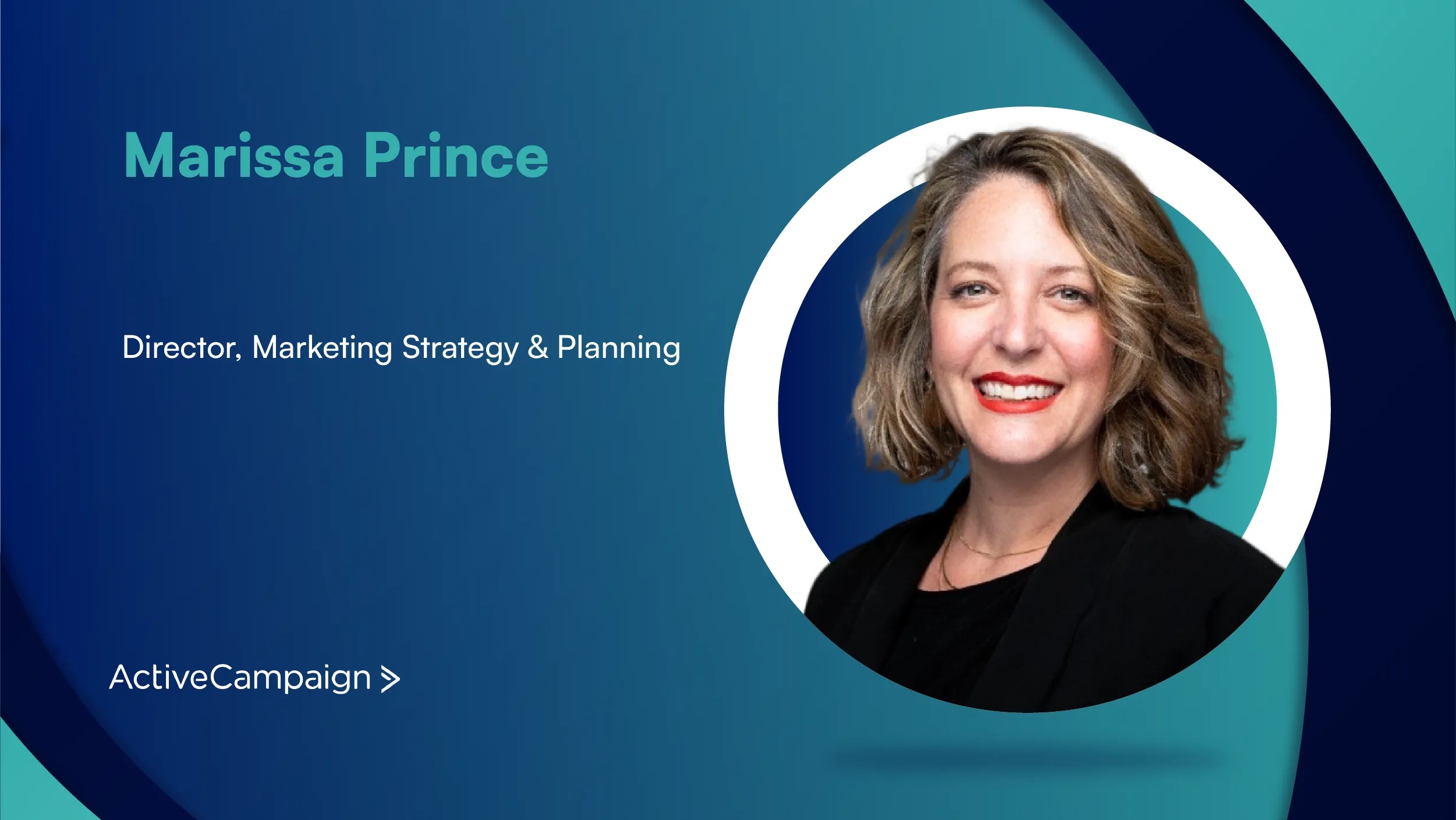

“Marketers should understand the goals an AI system is working toward, set appropriate boundaries, and review whether the results align with the goals. The role shifts from managing every individual action to working alongside AI, providing the judgment, context, and direction that help shape better outcomes.”
Marissa, could you tell us about your professional journey and your current role at ActiveCampaign? What drew you to the intersection of marketing, technology, and customer engagement?
My career has largely centered on helping marketing teams understand customers and turn those insights into stronger campaigns and experiences. Over the years, I've worked across marketing strategy, campaigns, and positioning, often standing up systems that enable teams to operate effectively, which has given me a close look at how technology can shape how teams connect with their audiences.
As Director of Marketing, Strategy and Planning at ActiveCampaign, I have a front-row seat to how technology is changing the way marketers work. What keeps me interested is the connection between the two sides. Technology helps marketing teams respond to customers more effectively and more personally, but the real opportunity lies in using it to better understand customers, create more relevant experiences, and drive stronger engagement and business results. AI is accelerating that opportunity by helping marketers move from analyzing what happened to identifying what could happen next, and acting on it.
Marketing automation has evolved significantly from simply automating repetitive tasks. How do you see the role of automation changing as AI becomes capable of not just executing workflows but also identifying opportunities and recommending or taking the next action?
The biggest shift is that automation has moved from following a set of instructions to responding to what is actually happening. Rather than waiting for a marketer to review performance, AI makes that process more flexible. It can spot changes in customer behavior or identify new opportunities and surface those signals, whether by flagging a campaign that is losing momentum, recognizing a new product page that creates an outreach opportunity, or suggesting a change based on what’s worked previously.
Active Intelligence is ActiveCampaign’s AI engine that fully understands a business and turns its data into useful recommendations and actions. It learns from a business’s history, performance patterns, audience behavior, and brand context to inform campaigns, automations, and customer experiences. As it learns more about the business, those recommendations improve over time. For example, it can recognize a website update and help surface a relevant campaign idea immediately before the marketer has even started planning.
The greatest value lies in giving growing teams the intelligence to act like they have more capacity, without losing the customer context that makes their marketing effective. It gives marketers more time to think, make decisions, and focus on what their customers need most.
Also Read: MarTech360 Interview with Erik Huberman, Founder and CEO at Hawke Media
ActiveCampaign is increasingly talking about autonomous marketing, in which AI can help marketers move from manually managing campaigns to systems that proactively identify what needs to happen next. What does this shift mean for the modern marketer?
To me, autonomous marketing means spending less time on the mechanics of a campaign and more time thinking about what it’s meant to accomplish. Marketers have traditionally handled every step themselves, from building audiences and setting up workflows to reviewing performance and deciding what comes next. As AI takes on more of that, teams can spend more time planning, testing, and improving their approach.
This is particularly useful for smaller teams that have plenty of ideas but limited time to execute on them. Tasks that once required several tools, manual handoffs, and hours of setup are now easier to manage, giving marketers more room to experiment.
It also provides an opportunity to rethink what productivity looks like. The goal shouldn't be just to produce more campaigns. It should be used to learn what resonates from each campaign, understand which strategies are actually moving customers forward, and build on what works. That gives teams more room to improve performance and to show leadership where marketing has the greatest impact.
As AI takes on more of the operational work behind campaigns, how should marketers rethink their role? Do you see AI freeing marketers to focus more on strategy, creativity, and customer relationships, or could it introduce new challenges around control and oversight?
I don’t feel that marketers need to prove their value by doing every task manually. Their value comes from understanding the customer, making good decisions, and knowing how marketing connects to the broader business.
As AI takes on more operational work, marketers can spend more time on the areas where human context matters most. That includes setting priorities, shaping the brand voice, developing creative ideas, and deciding how to respond to customer needs. It also means they can spend less time managing every step of a campaign and more time thinking about the bigger picture, while AI can help shape the strategy, bring those ideas to life, and learn from what happens next.
Marketers should understand the goals an AI system is working toward, set appropriate boundaries, and review whether the results align with the goals. The role shifts from managing every individual action to working alongside AI, providing the judgment, context, and direction that help shape better outcomes. The goal is for AI to extend what marketers can do, while marketers remain closely involved in the decisions that matter most.
Personalization has become a major expectation for customers, but marketers are also dealing with fragmented data, multiple channels, and increasingly complex customer journeys. What are the biggest barriers preventing brands from delivering truly connected and relevant experiences?
One of the biggest barriers is the gap between having customer data and acting on it. Most organizations have plenty of customer insights, but they can live across different systems, reports, and channels. Even when the data is available, someone still has to interpret it, decide what matters, and translate it into an experience.
The other challenge is scale. It is relatively easy to personalize a handful of campaigns, but it becomes much harder when you are trying to account for different behaviors, audiences, channels, and stages of the customer journey.
The challenge is making sense of all those pieces without losing sight of the person behind the data. Marketers must understand what a customer has already done, what they might need next, and where the interaction fits into the relationship. Autonomous marketing connects those signals and turns them into a more complete picture of the customer, while using that context to inform strategy, personalize experiences, and determine what action makes sense next. That allows marketers to focus on improving the overall customer relationship.
With ActiveCampaign supporting email, SMS, social, and advertising integrations, how important is it for marketers to move away from channel-specific campaigns toward a more unified view of the customer journey?
Customers don't experience a brand as a collection of channels; they experience a sequence of interactions. If someone receives an email, visits a website, or engages with an ad, and then responds to an SMS, those actions are part of the same customer relationship.
A unified view allows marketers to respond to the person rather than treating every interaction as an isolated campaign. It helps them meet customers where they are in their journey, with the information they need and in the channels where they prefer to engage.
The more complete the picture, the better a system can recognize patterns, identify opportunities, and understand what a customer is likely to need next, including where and how they want to receive that information. That context helps marketers create experiences that feel more relevant rather than simply adding more communications.
Generative AI can help marketers create content at scale, but creating more content does not necessarily mean creating better customer experiences. How can marketing teams use AI to improve relevance and engagement without making their communications feel generic or overly automated?
The first step is to give AI enough context to understand the business and the customer. Generic inputs tend to produce generic outputs. When AI can work from a company’s brand, campaign history, audience behavior, customer engagement, and performance data, it has a much stronger foundation for making relevant decisions.
The bigger shift is that marketers shouldn’t have to piece all of that together on their own. AI can now work alongside marketers to understand where a customer is in their journey, surface opportunities, and determine which information or interactions would be most useful. Instead of starting with “What can we create?” marketers can start with a business goal or a customer need and use AI to help develop a strategy around it.
That’s where autonomous marketing becomes especially powerful. It can proactively surface a campaign idea, flag underperforming content, identify a gap in the customer journey, or recommend a change based on its understanding of the business. The marketer then reviews those recommendations, provides direction, and decides what to act on. That creates a more collaborative approach, helping marketers think through what to do next rather than simply producing more content.
As AI becomes more involved in marketing decision-making, marketers will need to trust the recommendations and actions generated by these systems. What should organizations consider when balancing AI-driven decision-making with human judgment and brand control?
Organizations should understand how AI makes decisions and what information it uses to inform those decisions. Marketers also need to be comfortable with the level of autonomy they give the system and how it fits into their marketing strategy.
Context is especially important. A recommendation based on a company’s own history, audience behavior, and performance is easier to evaluate than one based on a generic industry assumption. That’s a core piece of Active Intelligence: Wavelength, our product’s latest version. Its recommendations are rooted in the individual business and become more personalized as the system learns from that account.
Finally, working alongside AI means deciding how much control to give it based on the task and the marketer’s goals. AI can surface opportunities, make recommendations, and take action, while marketers can stay involved where they want to provide direction or approval. As autonomous marketing evolves, the relationship shifts from overseeing every action to working together, with AI taking on as much responsibility as the marketer wants it to.
One of the biggest promises of marketing automation is helping lean teams accomplish more without adding complexity. In your experience, what separates organizations that successfully scale automation from those that simply end up with more workflows, more data, and more technology to manage?
The organizations that scale well start with outcomes rather than technology. They are clear about what they want marketing to accomplish, then look for processes worth automating. If the starting point is simply adding another tool or building another workflow, complexity can grow very quickly.
There's also a major difference between simply automating a process and improving a process. AI creates an opportunity to continuously evaluate whether something is working and recommend what should change. Simply making the existing process run faster is far less valuable.
Finally, successful teams build around a shared view of the customer and establish clear ownership. Their technology should reduce the number of manual decisions and handoffs required to complete work. According to ActiveCampaign’s internal platform data, new users launch their first AI-powered campaign in about 18 minutes, compared with 2.6 hours when completing the process manually. The larger opportunity behind that time savings is giving marketers more capacity to test ideas, think strategically, and focus on the customer.
Looking ahead, what do you believe the marketing technology landscape will look like over the next three to five years, and what should CMOs and marketing leaders start doing today to prepare for an era where AI-powered automation becomes the norm?
I expect marketing technology to continue becoming more and more autonomous. Technology has evolved quickly to understand what is happening across a business, identify opportunities, develop strategies, create campaigns, and increasingly carry those actions through to execution. For marketers, that means they may never have to start from a blank page ever again. Instead, they can work alongside an AI partner that helps them figure out what to do next and lets them take on as much of the execution as they want.
For marketing leaders, that creates an opportunity to do more without needing to build a huge team around every new initiative. Because at the end of the day, the fundamentals still matter. Customer data needs to be accessible and connected, and teams need clear brand and governance standards. But the bigger shift is giving marketers the ability to scale their thinking and their impact without scaling complexity at the same rate.
Most importantly, this changes what marketing teams can achieve and prove to the business. If AI can help a lean team identify opportunities, act on them, and learn from the results, marketers can spend more time on strategy, delivering stronger outcomes and demonstrating stronger leadership, which is what makes the next phase of autonomous marketing so exciting.
Thanks Marissa!
Marissa Dancer Prince is a marketing strategy and operations leader with experience across technology and marketing organizations. As Director of Marketing Strategy & Planning at ActiveCampaign, she focuses on translating marketing strategy into structured plans, operating processes, and cross-functional initiatives that support business performance. Her professional experience also includes work with Intuit Mailchimp, where she contributed to customer-focused marketing initiatives and campaigns, including the award-winning Clustomer campaign recognized at the 2024 ARF David Ogilvy Awards. Her background reflects a combination of strategic planning, marketing operations, customer insight, and cross-functional collaboration.
